Tile is the floor that shrugs off a St. Louis January. Salt, slush, wet boots dropped by the back door, a dog that just came in off a slick driveway - none of it bothers a properly set tile floor. That is why so many homes around here run tile in the entry, the mudroom, the kitchen and the baths, and something warmer everywhere else. This guide covers porcelain versus ceramic versus natural stone, slip ratings, grout and sealing, heated floors, and the question that decides half the job in an older home: what is underneath.
Why Tile Earns Its Keep Through a St. Louis Winter
Winter here is not a deep freeze that sets in and stays. It thaws. We cross above and below freezing over and over from December into March, and every crossing means water. Salt and cinders ride in on boot treads, sit on the floor and dry into a gritty white film. Carpet holds it down in the pile. Laminate seams drink it. A tile floor does not care. You wipe it up, and come April the floor is the same floor it was in October.
Summer makes the other half of the case. Dew points in the seventies push moisture into everything in the house, and wood moves with it. Tile set over a properly prepped subfloor stays flat through both seasons. In St. Louis homes where the back door opens onto the driveway or the alley, the stretch from that door to the kitchen is the hardest working eight feet in the house. Tile is the honest answer for it.
Porcelain, Ceramic or Natural Stone
All three get called tile on the showroom floor. They behave differently once they are underfoot.
Porcelain is fired hotter and denser, absorbs almost no water, and carries its color deeper into the body, so a chip is less obvious. Ceramic is softer and cheaper, and it is perfectly good on a wall or in a powder room that sees light traffic. Natural stone is a quarried material with real variation, real beauty and real maintenance. It wants a penetrating sealer and a schedule you actually keep.
| Material | Installed $/sq ft | Where It Fits Here | Watch For |
|---|---|---|---|
| Porcelain | $8 - $18 | Entries, mudrooms, kitchens, baths, basements | Harder to cut, so labor sits higher in the range |
| Ceramic | $8 - $13 | Powder rooms, walls, backsplashes, light traffic | Softer body chips at the edges under winter grit |
| Natural stone | $12 - $18 | Foyers and baths where you want character | Sealing on a schedule, and salt can etch some stone |
For most entry and mudroom jobs around St. Louis we point people at porcelain tile. Natural stone tile is worth it when you love a specific slate or travertine and you are honest with yourself about sealing it. Mosaic tile belongs on shower floors and in accent bands, where all those extra grout joints actually help you keep your footing.
Slip Ratings and the Back Door Test
Tile spec sheets list a DCOF number, which is a measure of wet slip resistance. The industry line for interior floors that get wet is 0.42. It is not a guarantee, but it is the most useful number on the sheet, and any decent supplier can pull it for you. The other test is free: run your thumb across the tile. If it feels like glass in the store, it will feel like ice with slush on it.
- Entry, mudroom and any door off a driveway: 0.42 or higher, with texture you can feel.
- Kitchens: still 0.42. Water plus cooking oil is worse than water alone.
- Bathroom floors: texture, or a smaller tile with more grout lines, since grout is the grippiest thing in the room.
- Shower floors: mosaic sheets every time. More joints, better grip, and they shape to the slope.
- Polished stone and high-gloss porcelain: beautiful, and a poor choice anywhere winter comes indoors.
Not sure which tile belongs in which room? Bring your measurements to the Maryland Heights showroom, or have us come measure.
Get a free in-home estimateGrout, Sealing and the Five-Year Look
Homeowners agonize over tile color and pick grout in ninety seconds. Flip that. Grout is what ages. Bright white grout in an entryway that eats road salt all winter will look tired by the second spring. A mid-tone gray or greige hides traffic, hides the mop line, and still reads clean. Match the grout close to the tile and the floor looks like one calm surface. Contrast it and you get a grid, which is a fine choice as long as you mean it.
Joint width matters too. Large-format tile with a tight sixteenth-inch joint gives you less to clean. Cement grout should be sealed once it cures, then resealed every couple of years in wet rooms. Epoxy grout costs more up front and skips the sealing, which is a fair trade in a mudroom or a shower. Either way, sweep the grit off. Sand is what actually wears a floor down, and in a St. Louis winter it arrives daily.
Heated Floors, and Where They Pay Off
Electric heat mats go down under the tile in the thinset layer and run off a thermostat on the wall. Figure roughly $10 to $15 per square foot on top of the tile for the mat, the sensor and the electrical work. In a 40 square foot bathroom that is a few hundred dollars, and it is the single most-loved upgrade we install. Tile is cold. A heated tile floor at 6:30 on a February morning is a different room entirely.
Two honest notes. It is supplemental heat, not a furnace replacement, though a small well-insulated bath can coast on it. And it has to be planned with the tile job rather than added later, because the mat lives under the tile. If you think you might want it in a bathroom you are already re-tiling, do it now.
The Subfloor Question in Older St. Louis Homes
Here is where older houses get interesting. A brick two-flat in the city or a 1920s bungalow sits on wood joists over a basement, with plank or plywood subfloor above. Tile is rigid and unforgiving. If the floor flexes when you walk it, the grout cracks first and the tile follows. Newer slab-on-grade construction out in St. Charles County rarely has this problem. Homes in University City, Webster Groves and the older city neighborhoods often do.
The fix is not exotic, it just has to happen. Usually that means adding a layer of plywood to stiffen the assembly, then an uncoupling membrane or backer board over it so seasonal movement in the wood does not telegraph into the tile. Sometimes a joist needs sistering, or a soft spot near a bathroom needs cutting out. That is floor repair and demolition and prep work, and it belongs in the written estimate before anyone orders tile.
- Bounce underfoot when you walk across the room, or dishes rattling in a cabinet.
- Existing tile with cracked grout running in a straight line across the floor.
- A soft spot near a toilet, a tub or an exterior door.
- More than one layer of old flooring already stacked up, raising the height at every doorway.
What Tile Costs in the St. Louis Area
Installed tile runs $8 to $18 per square foot here, and material is only part of it. A straight-set large-format floor in an open kitchen sits low in that range. A herringbone or a small hex in a bathroom full of cuts, a curbless shower, or a floor that needs a plywood layer and a membrane first, sits high. Tearing out the old floor and hauling it away is a real line item too, especially over old mortar-bed tile.
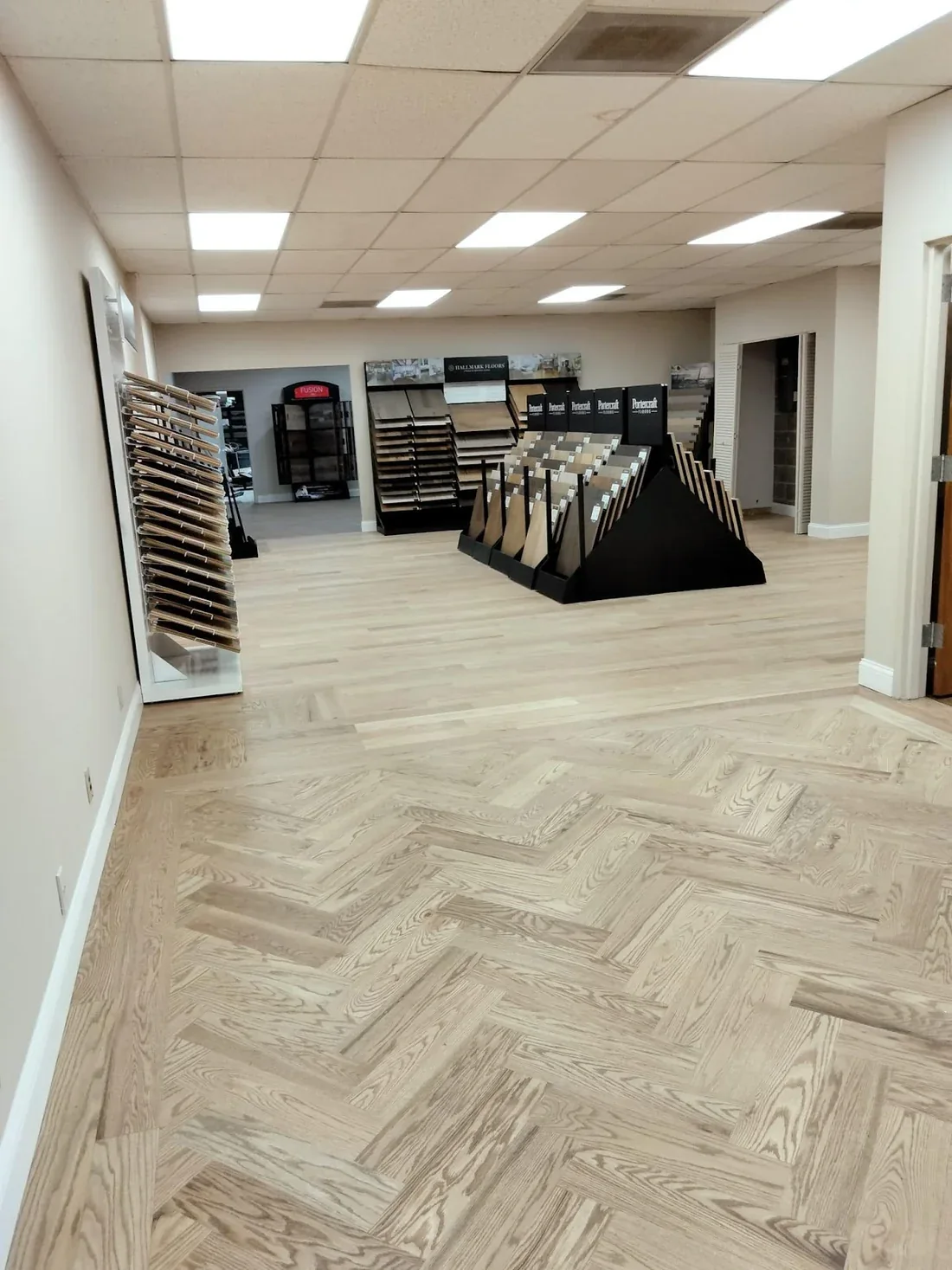
We measure, look at the subfloor, and turn that range into one written number with the prep spelled out. You can book a free in-home estimate online or call (314) 897-4383. The showroom at 149 Weldon Pkwy in Maryland Heights is open weekdays from 8 to 5 if you would rather put your hands on samples first.