These two products get compared constantly, usually badly. Somebody tells you laminate is cheap junk. Somebody else tells you vinyl feels like vinyl. Neither is true anymore, and in a St. Louis house the right answer depends less on which product is better and more on which rooms you are covering. Here is how we actually talk it through with homeowners at the showroom, without a sales pitch attached.
What They Actually Are, Under the Picture
Both products are a printed image of wood under a clear protective layer. The difference is what sits below that image. Laminate is built on a high-density fiberboard core. That is compressed wood fiber, and wood fiber drinks water. Modern laminates have much better edge sealing than the stuff that gave the category a bad name in 1998, and a spill you wipe up is a non-event. Water that sits for hours is a different story, and once an HDF core swells it does not shrink back.
Luxury vinyl plank has a plastic core, either SPC (stone plastic composite, denser and more rigid) or WPC (wood plastic composite, a bit softer and warmer underfoot). Neither one absorbs water. You can leave a puddle on LVP overnight and the plank itself is unbothered. What can still be affected is the subfloor underneath, so waterproof flooring is not the same as a waterproof room, but the plank will not swell.
| Luxury vinyl plank | Laminate | |
|---|---|---|
| Core | Plastic (SPC or WPC), waterproof | High-density fiberboard, water-sensitive |
| Surface hardness | Softer, can dent under heavy point loads | Harder, resists dents better |
| Scratch resistance | Good, depends on wear layer | Very good, aluminum-oxide wear layer |
| Basements and below grade | Yes | No |
| Feel and sound | Quieter, warmer, softer step | Firmer, can sound hollow without good underlayment |
| Installed cost per sq ft | $5 - $10 | $4 - $8 |
Wear Layers and AC Ratings, Decoded
These are the two numbers worth learning, because they are the honest way to compare a $3 plank to a $6 plank. For LVP, the spec is the wear layer, measured in mils. That is the clear top film, and it is the only thing standing between the printed image and your dog. A 6 mil wear layer belongs in a rental or a spare bedroom. Twelve mil is the sweet spot for a family home. Twenty mil is commercial grade and worth it in a mudroom or a busy kitchen. Thickness of the whole plank is a comfort spec, not a durability spec. Do not let a salesperson swap one number for the other.
For laminate, the spec is the AC rating, which runs AC1 through AC5 and describes abrasion resistance. AC3 is the realistic residential minimum. AC4 handles a house with kids, dogs and a back door that gets used. AC5 is built for commercial traffic and shows up in the better residential lines too. Between two laminates that look identical, the AC rating and the thickness of the board, usually 8mm or 12mm, are what separate them.
Basements Decide a Lot of These Arguments
Almost every home in this region has a basement, plenty of them are finished, and a meaningful number of them have taken water at least once. Sump pumps fail. Storms overwhelm drains. Somebody's water heater lets go in a Ballwin split-level and nobody finds it until Saturday morning. That single fact settles the basement question: below grade, we install LVP or tile, and we do not install laminate. If your finished basement rec room is on the list, look at LVP first and stop comparing.
Slabs need one more step either way. Concrete gives off moisture vapor, especially in the newer slab-on-grade builds out in St. Charles County. We test the slab, use the right underlayment or vapor barrier, and grind or patch flat spots before anything floats over it. Skipping that is how a floor ends up clicking and separating a year later. It is the same prep discipline that goes into any flooring installation we do.
Where Laminate Genuinely Wins
Laminate gets dismissed too fast. On upper floors and main levels that stay dry, it is an excellent product. The wear surface is harder than LVP, so it shrugs off scratches from chair legs and dog nails better. It costs less per square foot. The embossed textures on the good lines are convincing, and a 12mm laminate over a quality pad feels solid underfoot in a way that thin vinyl does not.
If you are redoing bedrooms and a hallway in a Ballwin ranch and the budget is real, laminate at $4 to $8 installed will look sharp and last a long time. Add laminate stairs with matching stair nose and the whole level reads as one floor. The only rule is to keep it out of the basement and be quick with spills in the kitchen.
Where LVP Genuinely Wins
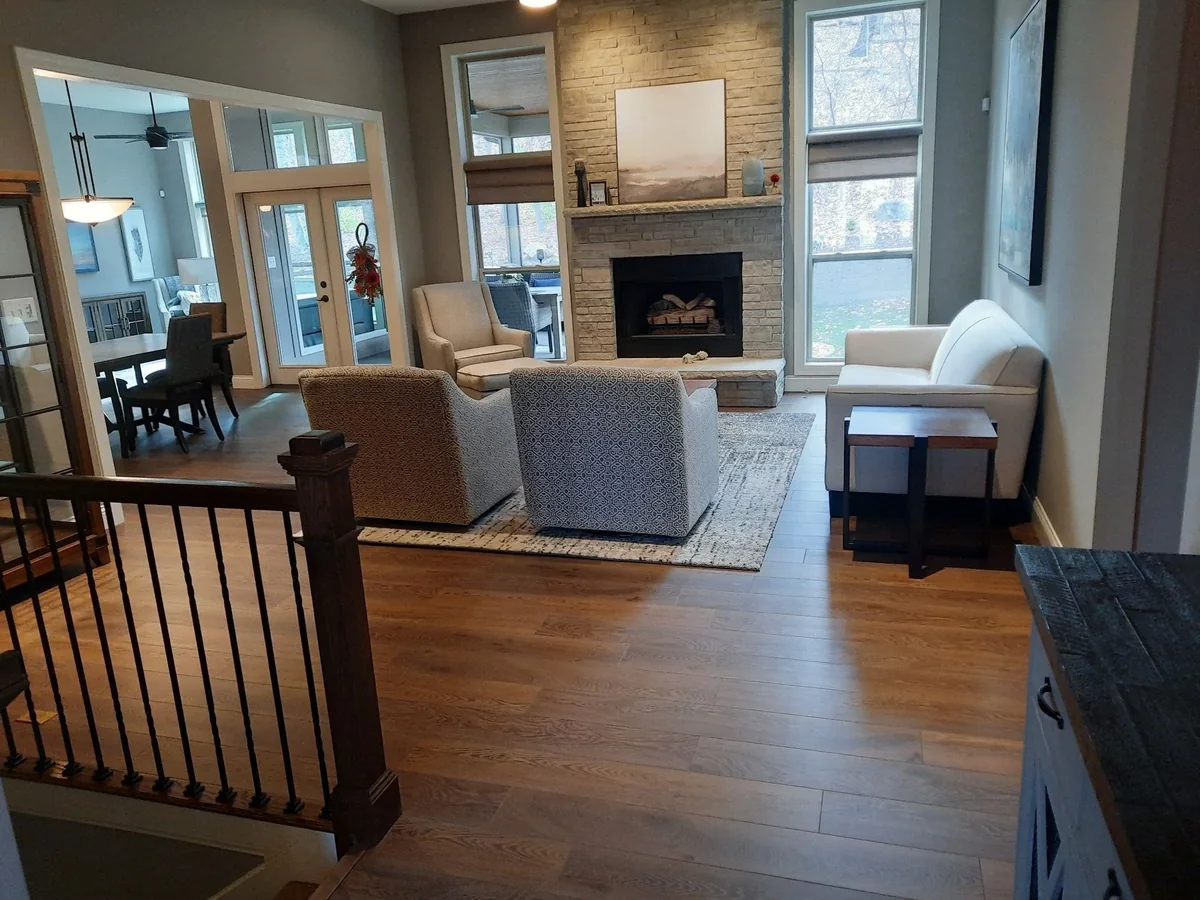
Kitchens, mudrooms, laundry rooms, bathrooms, basements, and any house with pets or small kids. LVP handles the dog bowl that gets knocked over and the boots that come in wet from a February driveway. It is quieter and warmer underfoot than laminate, which matters more than people expect in a bedroom. It also comes in thinner glue-down and loose-lay formats that solve odd situations, like going over an existing tile floor without demolition.
The honest downside is denting. A plastic core is softer than fiberboard, so a dropped cast-iron skillet or a piano leg without a pad can leave a mark. Higher-density SPC cores handle this much better than budget product, which is one more reason the cheapest LVP on the internet is usually a bad deal. We also cover stairs in matching material when the floor calls for it, and vinyl flooring stairs run $60 to $150 per tread depending on the product and the nosing detail.
Cost and Resale, Straight
| Option | Installed per sq ft | 300 sq ft room | Best fit |
|---|---|---|---|
| Laminate | $4 - $8 | $1,200 - $2,400 | Dry bedrooms, halls, main levels on a budget |
| Luxury vinyl plank | $5 - $10 | $1,500 - $3,000 | Kitchens, basements, pets, whole-house durability |
| Engineered hardwood | $8 - $14 | $2,400 - $4,200 | Living areas where you want real wood over a slab |
| Solid hardwood | $9 - $16 | $2,700 - $4,800 | Main-floor living areas, long-term resale |
On resale, be realistic. Buyers in this market pay a premium for real wood, and they say so out loud at showings. LVP and laminate are both seen as clean, updated, practical choices, not as value-adds. If you are staying ten years, buy for how you live. If you are selling in two and the main floor has original oak under the carpet, pulling the carpet and refinishing that oak is almost always the better money.
Still torn between the two? Have our sales team measures and price both.
Get a free in-home estimateHow to Decide in Ten Minutes
Answer three questions. Does this room ever get standing water, and is it below grade? If yes, LVP. Is the budget the hard constraint on a dry upper level? Lean laminate. Do you have dogs, kids, and a back door that never closes? LVP with a 12 to 20 mil wear layer.
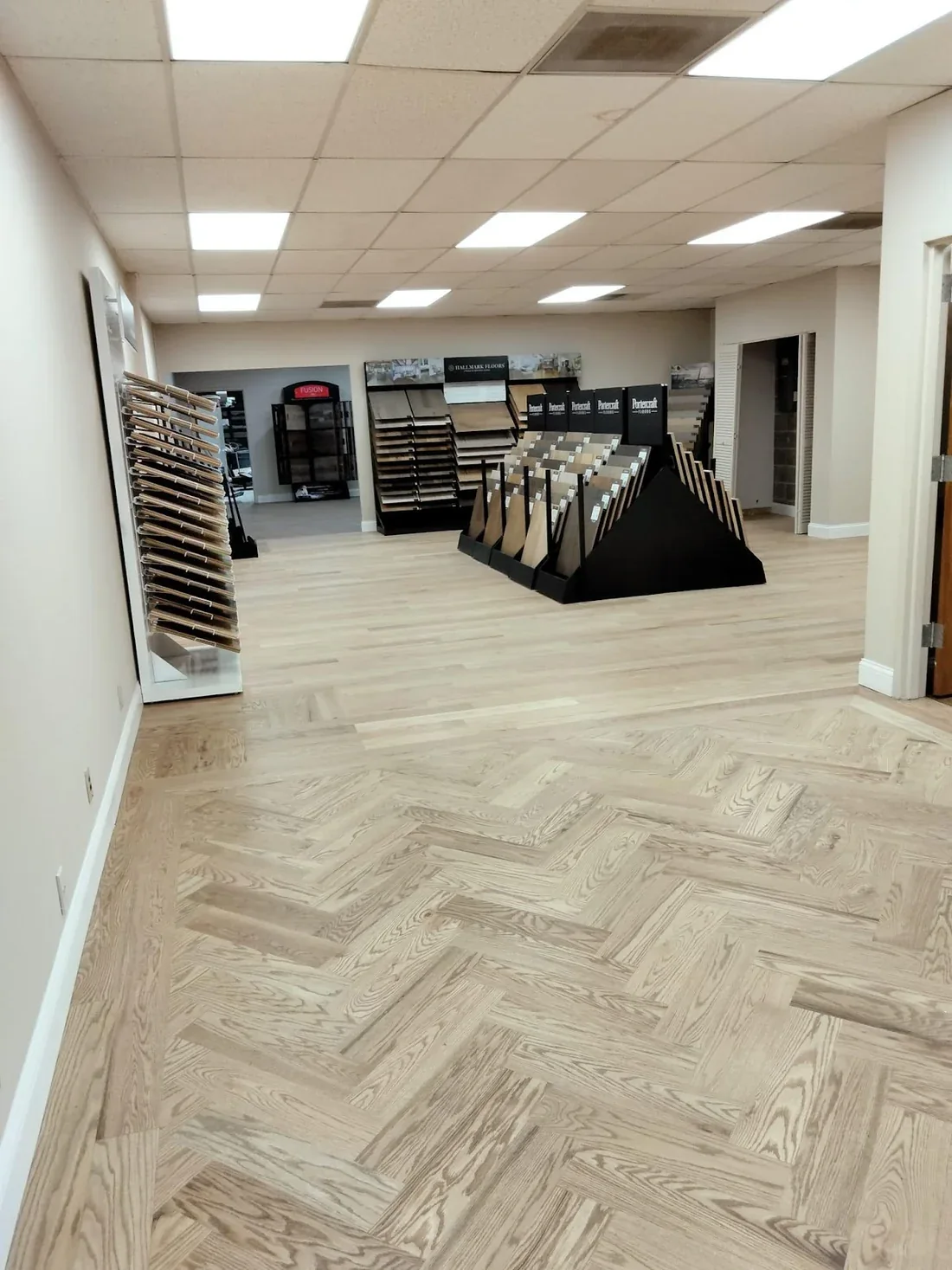
Then come see both. Photos on a phone lie about texture and sheen, and the difference between a good plank and a cheap one is obvious in your hand. The showroom at 149 Weldon Pkwy in Maryland Heights has Hallmark Floors, Portercraft and Fusion on the racks, Monday through Friday 8 to 5. Call (314) 897-4383, ask about financing if it helps the project happen this year, and book a free in-home estimate so you get a written number instead of a range.